One Week in Guatemala: Treehouses, an Erupting Volcano, and a Kitchen Above the Lake
We had seven days in Guatemala in late May, at the edge of the season where the rain starts and the whole country turns green. We spent them swinging between two extremes, mornings doing absolutely nothing in a hammock, and a pre-dawn hike toward a crater throwing lava into the dark.
This is the route, in order, and the places we'd send you to without hesitating.
The short version
Seven days, May 18–24 — enough for Antigua, the volcano, and the lake without rushing any of them
Earth Lodge, in the hills above Antigua — treehouse cabins on an avocado farm, family-style meals, hammocks with a view
Antigua just down the hill: a working coffee farm, colonial streets, and more good coffee than we could get through
Acatenango with Campify — camp on one volcano, hike toward Fuego before sunrise to watch it erupt
Lake Atitlán by shuttle and boat, staying above San Marcos at AMATE Atitlán
A Mayan cooking class with Anita in San Pedro — the thing we've talked about most since we got home
Back to Antigua at the end, mostly for the coffee
Earth Lodge: the part where we stopped moving
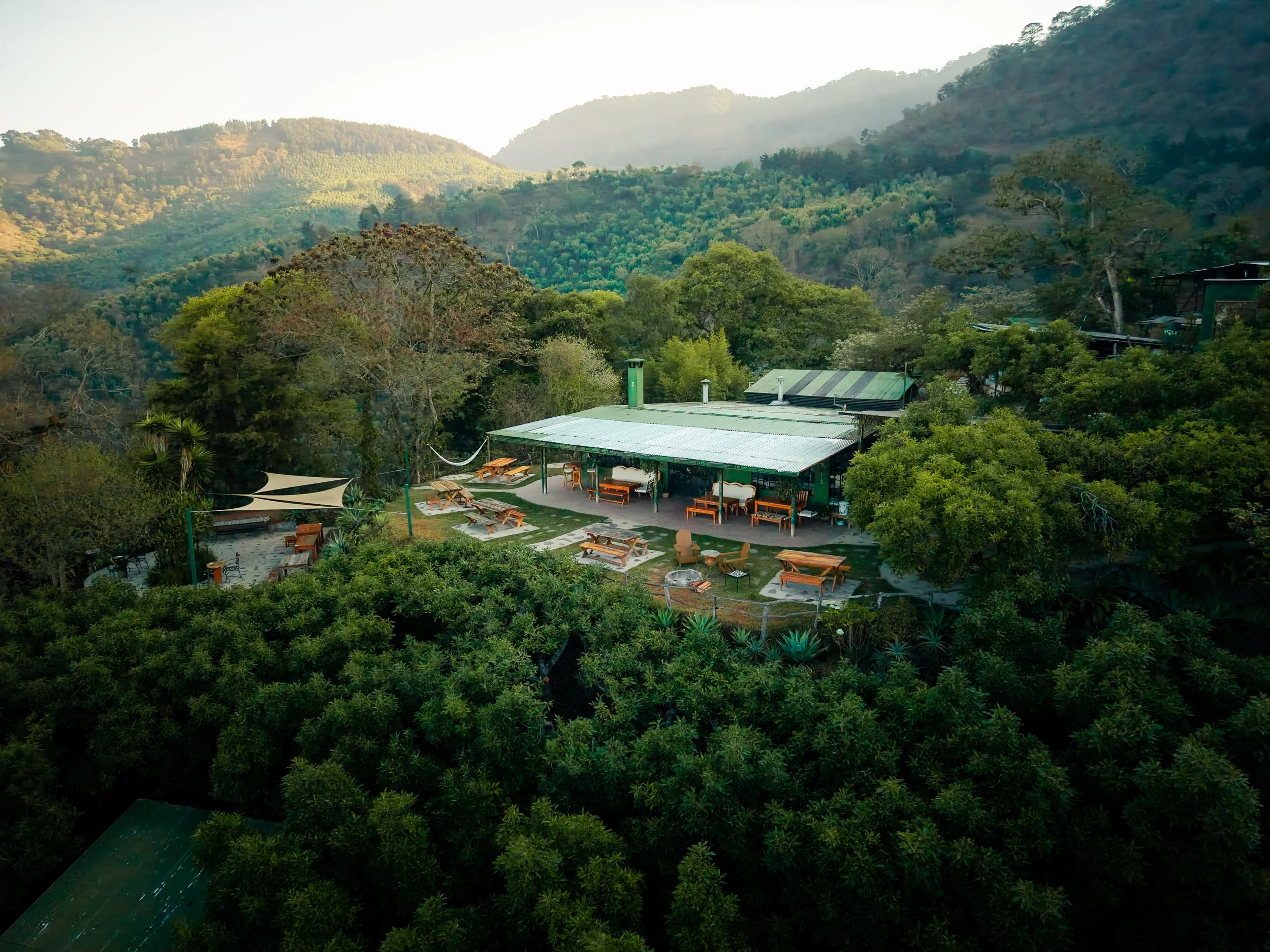
Earth Lodge sits up in the hills above Antigua on a working avocado farm. You leave the city, climb a dirt road, and arrive somewhere that feels considerably further from town than it is.
We stayed in one of the treehouse cabins — up in the canopy, open to the air, close enough to the trees that you wake up inside the sound of them. There's no real separation between inside and out, which sounds like a downside for about four hours and then stops being one entirely.
Meals are served family-style at set times, most of it grown on the property, all of it eaten with whoever else happens to be there that week. There are hammocks and swings strung along the ridge, and the honest truth is that we spent whole afternoons in them accomplishing nothing.
What we'd tell you: if your schedule allows, book Earth Lodge at the start of your Antigua stretch and again after the volcano. We came back with wrecked legs and it turned out to be exactly the right place to have them.
Antigua: coffee, a farm, and the streets
Antigua is a short ride down the hill and it's easy to lose an entire day there without meaning to.
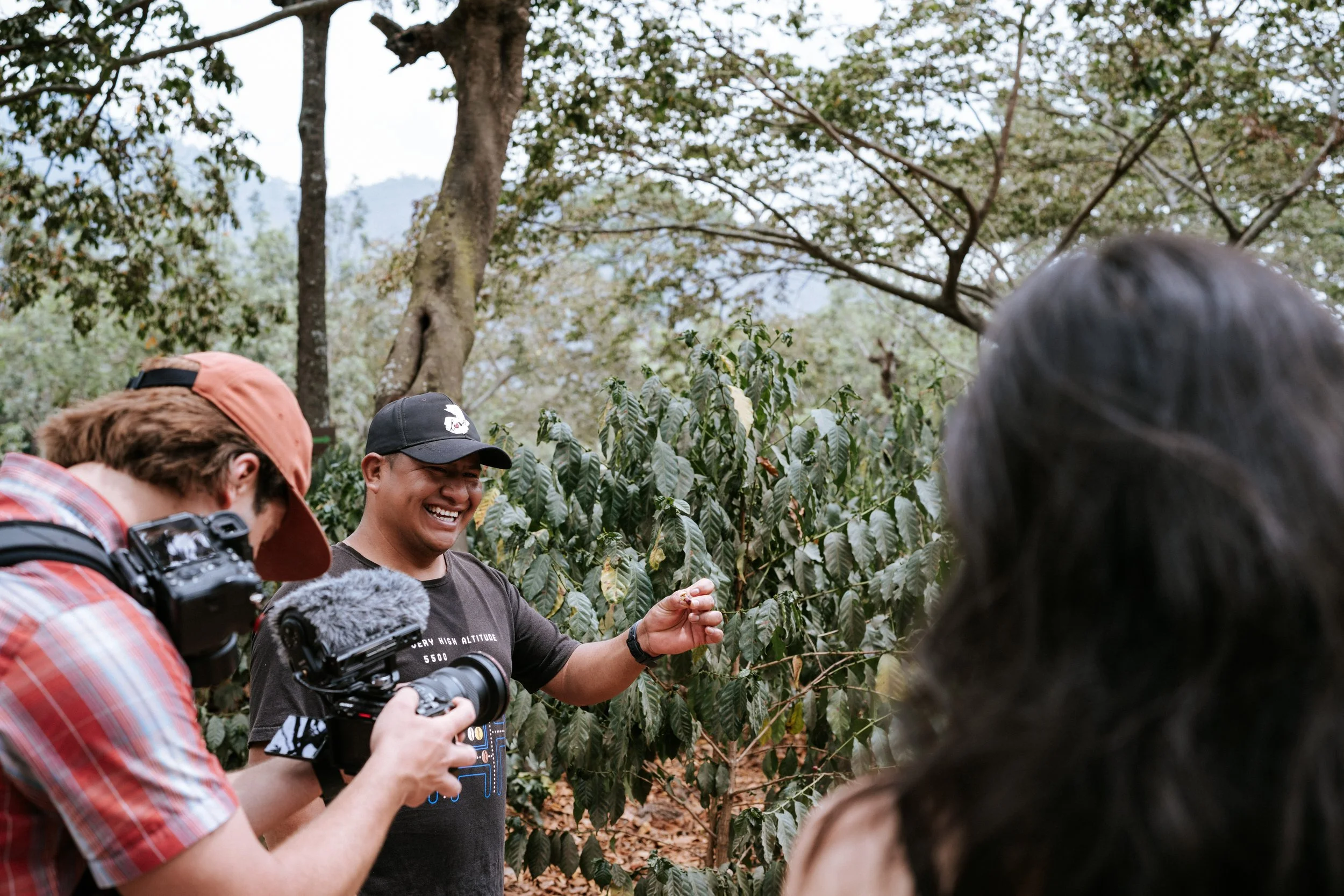
Finca La Azotea. We spent a morning at La Azotea, a working coffee farm just outside Antigua in Jocotenango. They walk you through the whole thing, the trees, the processing, the roast and there's a small museum on the property covering the history of Guatemalan coffee alongside exhibits on Mayan music and highland culture.
If you're the kind of person who cares where the beans came from, it quietly reframes every cup you drink for the rest of the trip.
The most colorful city in Central America
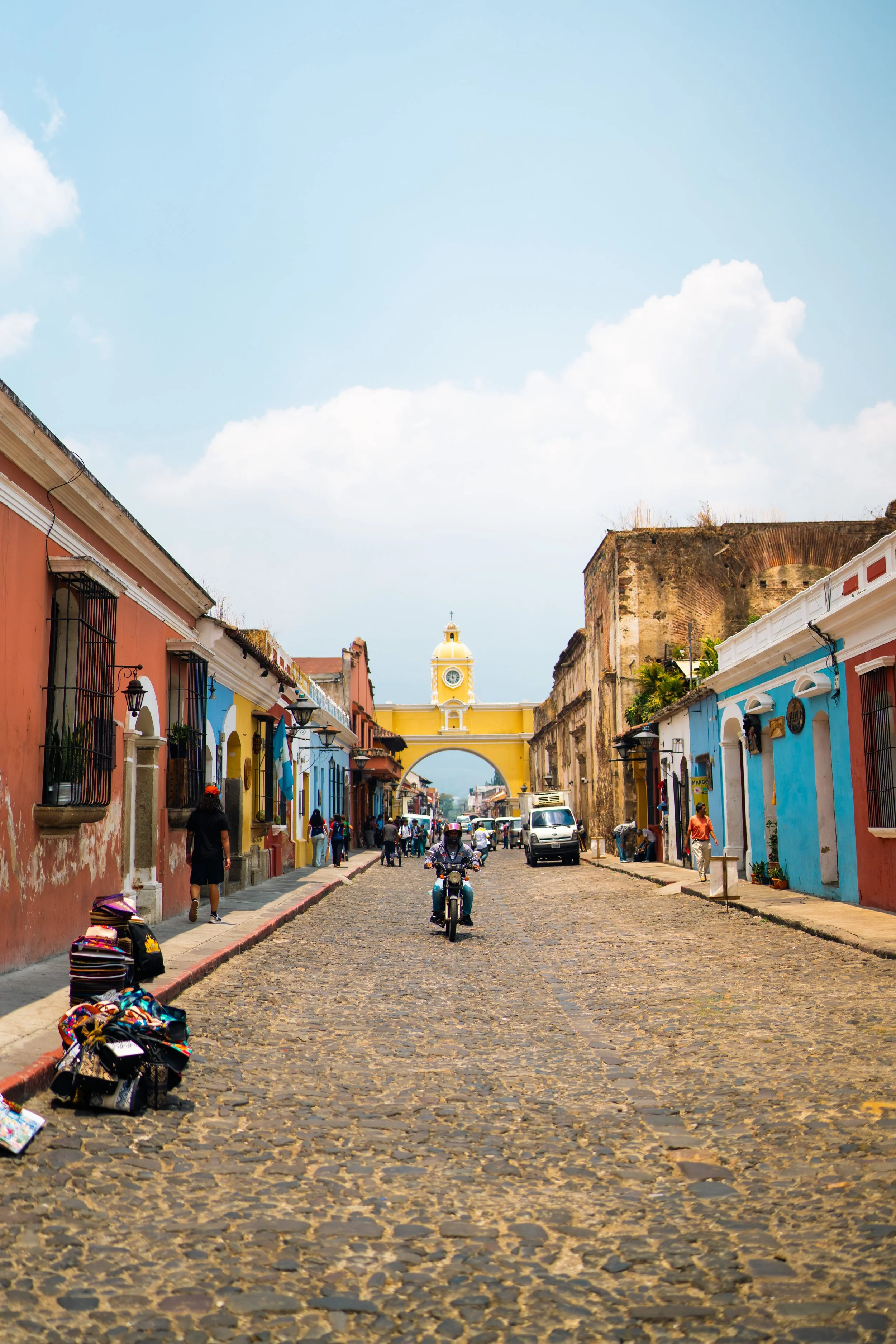
Antigua is a city you walk without a plan. The streets are cobblestone and rough underfoot, the buildings run in saturated yellows and ochres and blues, and there's always something audible — bells, a market, someone selling something two streets over.
We did stop at the obvious photo spots, including the Santa Catalina Arch, and we'd tell you to do the same. It's the most photographed corner in Guatemala for a reason: the arch frames Volcán de Agua rising at the end of the street, and it changes completely depending on the light. Go early if you want it without a crowd.
Acatenango: camping on one volcano, hiking toward another
This is the part people ask about.
The naming, because everyone gets it confused: you camp on Acatenango. The volcano erupting across the saddle is Fuego — its active neighbor. Camp faces it directly, and if you want to get closer, you hike out toward it in the dark.
We went with Campify, who run the trip with 4x4 access partway up the mountain. You still hike the final stretch to camp, but you skip the long grind from the bottom — which meant we arrived with enough left in the tank to actually enjoy being there.
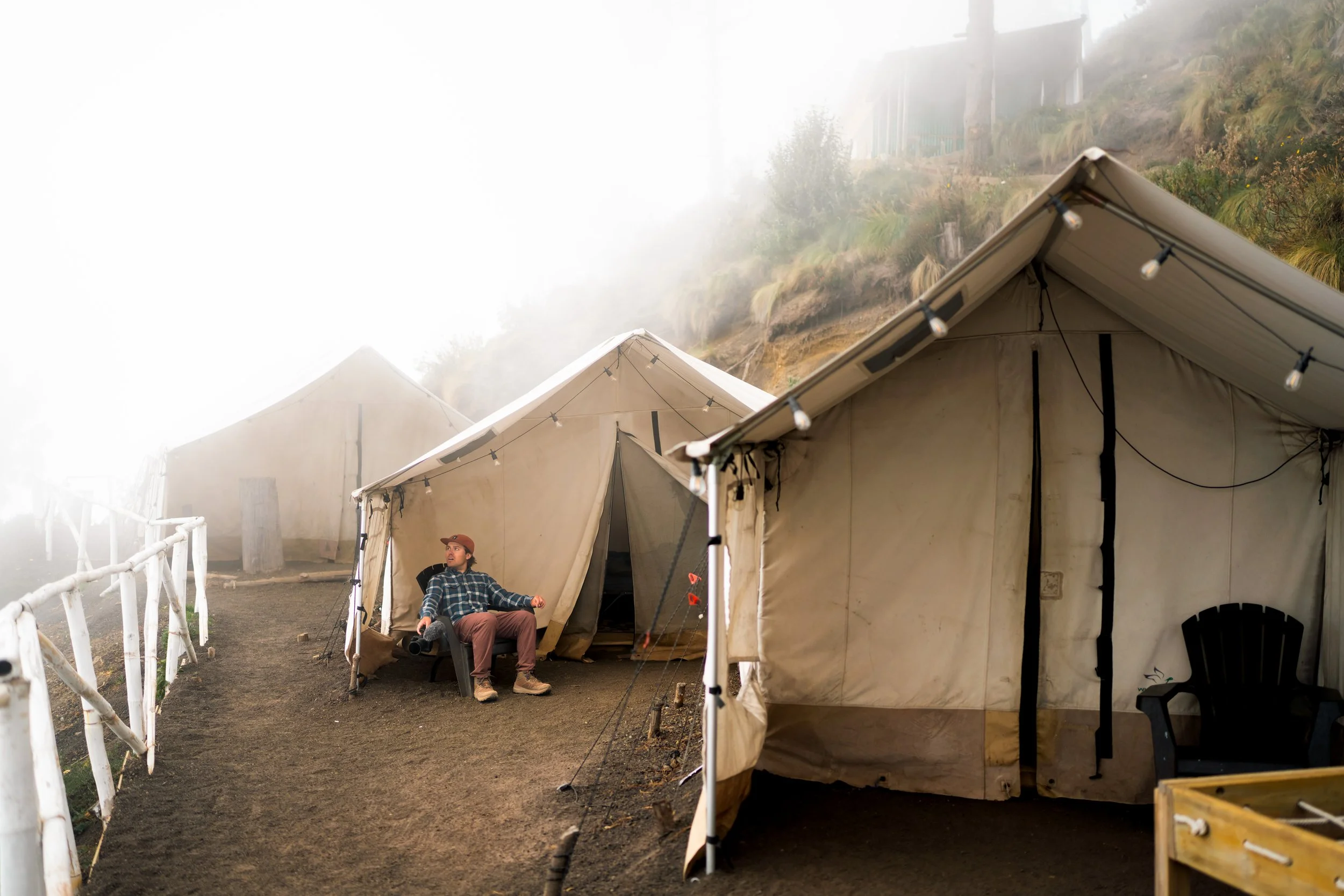
Camping on Acatengo with Campify
The camp was way better than what we were expecting. We had nice warm tents with nicely padded cots and comfortable sleeping bags. We could watch Fuego erupt from inside our tent, it was truly incredible.
Fuego erupts on and off all night. You hear it before you see it a low sound that doesn't have an obvious source and then the glow.
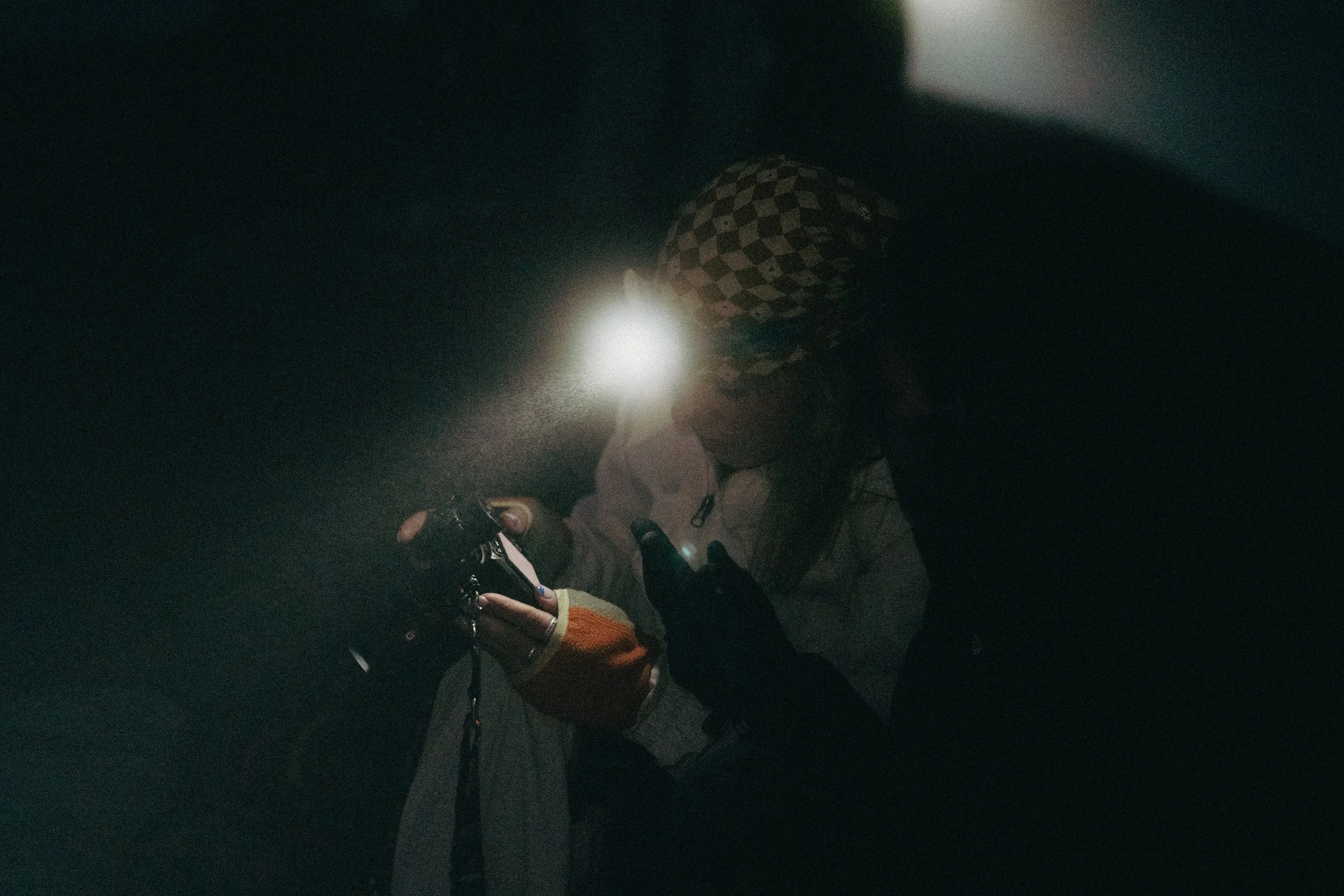
It was an early morning wake up call to hike Volcan de Fuego
2am was the wake up time and we started hiking in dense fog and pitch blackness. The YouTube video shows exactly what we were dealing with. The hike was intense. Straight down for the first hour and straight up for another hour of hiking. It something I will never forget.
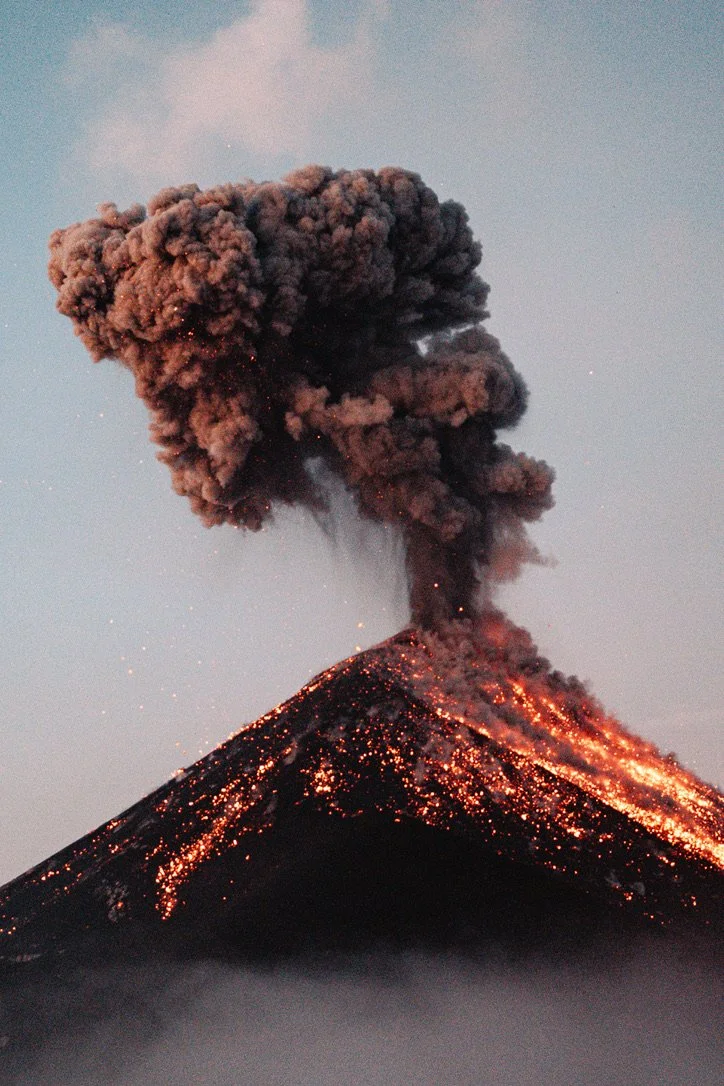
Fuego Erupting
Not many words were said, mostly screaming from the girls and a lot of oooo’s and ahhhh’s. We were in shock!
What we'd tell you:
Take the 4x4 option unless the full climb is genuinely the point for you
It gets properly cold up there | colder than the daytime weather suggests (bring layers)
The altitude is real; go slower than you think you need to
we brought more gear than needed
FX3
A74
A7R5
DJI Air 3S Pro
I wish I brought more batteries for the drone. I only brought one because of space and weight.
Lake Atitlán: shuttle, boat, and a house above the water
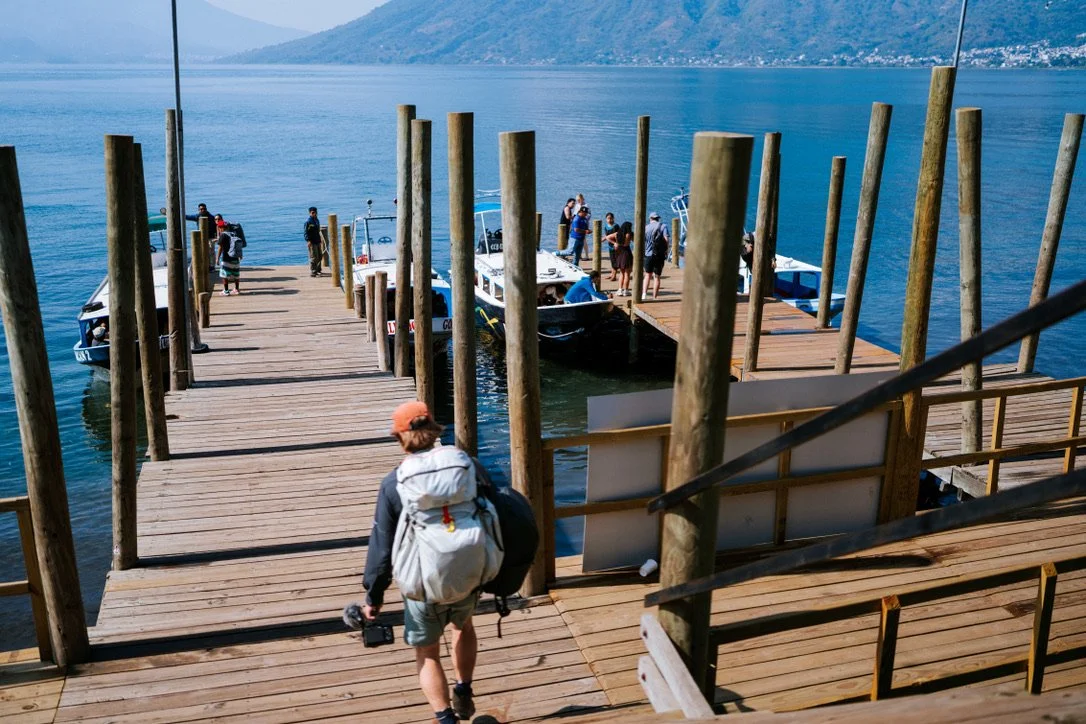
Boarding the boats to get to the next town!
You get to Atitlán by shuttle, then by boat. Most of the villages around the lake have no real road access, so the water is the highway, which is a strange thing to get used to and then a hard thing to give up.
We stayed at AMATE Atitlán, a small collection of cabins in the hills above San Marcos La Laguna. The cabin felt so remote, we had a good 20 minute hike but it was well worth the incredible views. This might have been the nicest place I’ve ever stayed with such insane landscapes.
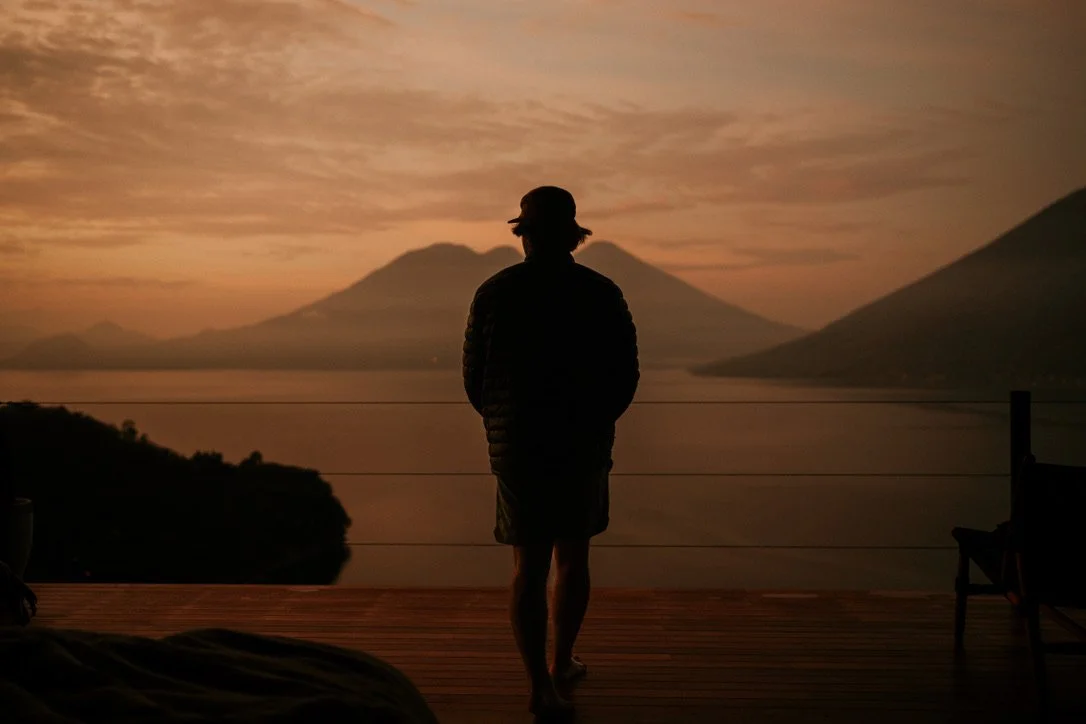
The only way to wake up to a sunrise
The way the building framed the mountains it was like it was made for epic photos and videos to be taken here.
Cooking with Anita. We took a boat over to San Pedro La Laguna for a Mayan cooking class with Anita, who runs Mayan Kitchen out of her home.
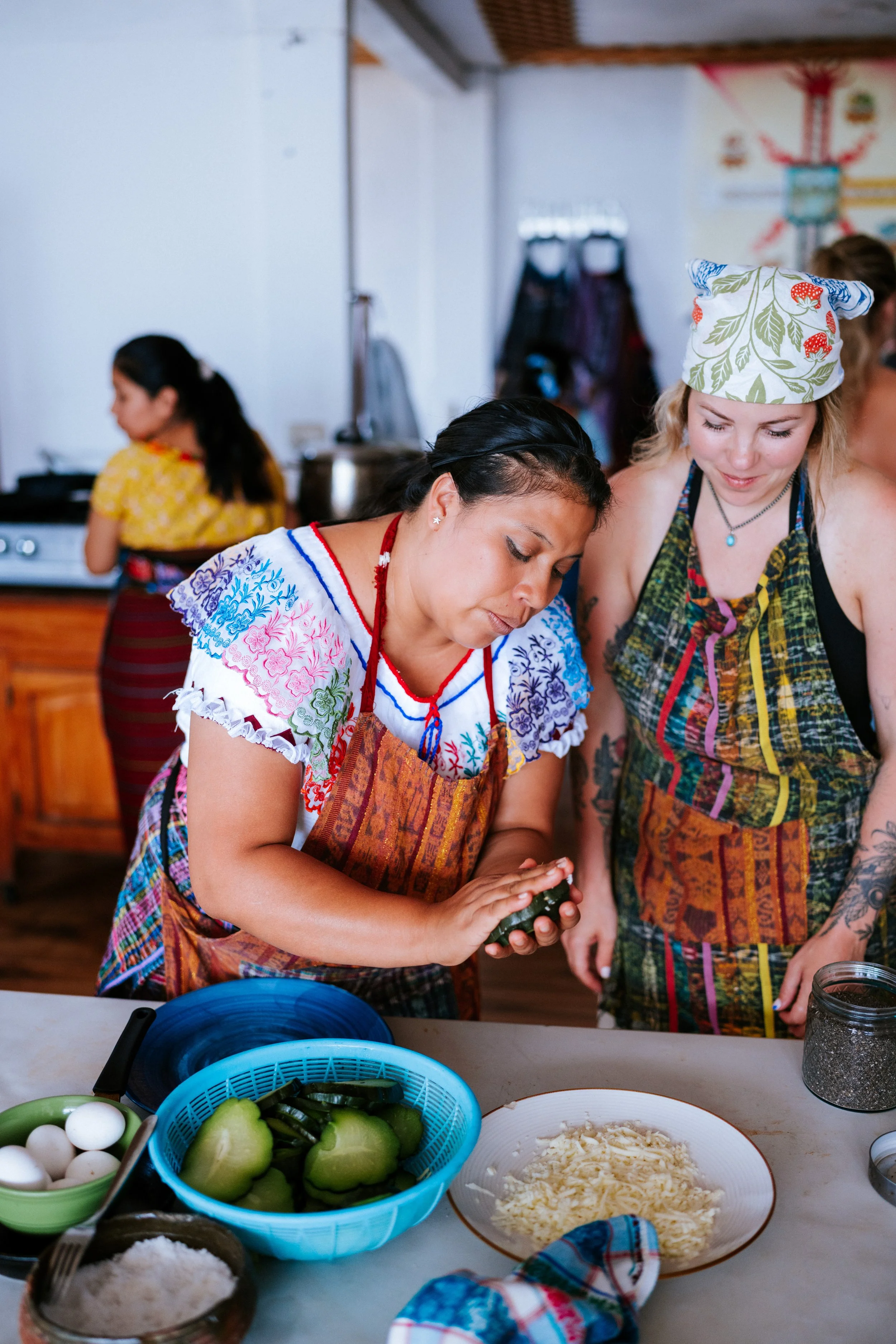
Cooking with Anita
We took a boat over to San Pedro La Laguna for a Mayan cooking class with Anita, who runs Mayan Kitchen out of her home.
It starts at the market. Anita walks you through it buying the day's ingredients, greeting vendors she's clearly known for years, explaining what things are and why they matter. Then you go up to her open-air kitchen, which looks straight out over the lake, and you cook.
We made tamales. Not the version most Americans picture — Guatemalan tamales are softer and wrapped in banana leaf, and the whole thing is built by hand from masa up. There's a technique to spreading it and folding the leaf that Anita makes look effortless and that took us considerably longer to get right.
Could you do this in a week?
We did, and we'd do it again the same way. The thing that makes it work is that Antigua and Atitlán are the only two bases you need — you're not packing up every night, and the volcano slots in as a two-day trip out of Antigua rather than a separate leg.
What we wouldn't do is add a third region. Seven days is enough to do these three places properly, if you’re wanting to see more I would extend your trip to make it more enjoyable so you’re not always on the go.
Before you go
Getting there. Fly into La Aurora (GUA) in Guatemala City. Antigua is a short ride away — most people skip the capital entirely, and we'd do the same again.
Getting around. Tourist shuttles link Antigua, Panajachel, and the main towns, and public boats run between the lake villages. Neither runs on a schedule you'd call strict. Build in more margin than feels necessary.
Going in late May. We went May 18–24, right at the turn — dry season ending, rains beginning. Everything was green, the crowds were thinner than the winter high season, and afternoon storms were part of the deal. [It rained on us — how often, and did it ever actually change your plans?] If you want the safest odds on clear volcano views, the earlier dry months are the bet. If you want the country at its greenest with fewer people in it, late May is a good trade.
Cash. Bring quetzales. A lot of the best places — the market, the boats, the small kitchens — don't take cards.
Altitude. Antigua sits high, and camp on Acatenango sits a great deal higher. Coming from Colorado we were reasonably acclimated. Coming from sea level, give yourself a couple of days before the volcano.
Book ahead. On a week-long trip there's no slack in the schedule, so bookings matter more than they would on a longer one. Earth Lodge, Campify, and Anita's class all fill up.